
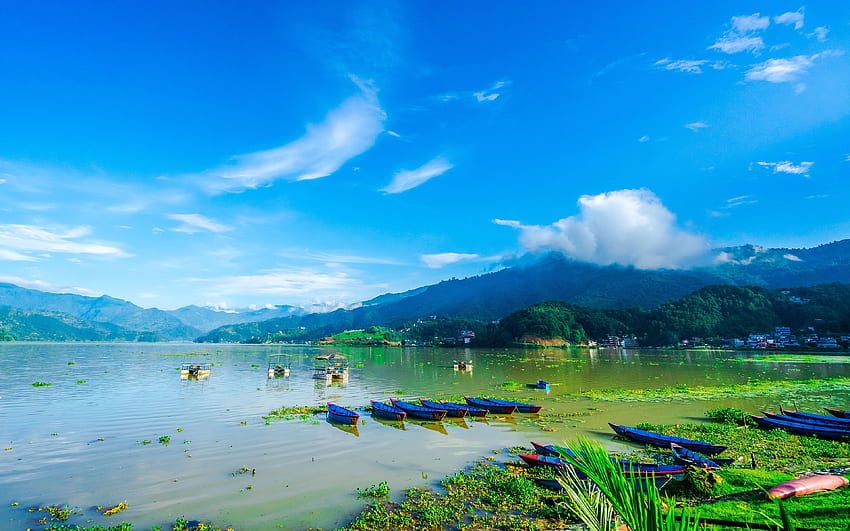
Pokhara Overview
Pokhara’s tranquil beauty has been the inspiration for many travel writers. Its pristine air, spectacular backdrop of snowy peaks, blue lakes, and surrounding greenery make it ‘the jewel in the Himalaya,’ a place of remarkable natural disposition. With the magnificent Annapurna range forming the backdrop and the serenity of the Cluster of 9 Lakes, including the three major ones - Phewa, Rupa, and Begnas - Pokhara is an ideal destination for a weekend getaway as well as a long, relaxing holiday. The Pokhara Valley, gateway to the Annapurna region where many a trekker finds their Shangri-la, sits high on the list of ‘must visit’ places in Nepal.
Historically, Pokhara lay on an important trade route between India and Tibet. To this day, mule trains set up camps on the city outskirts, bringing goods from remote Himalayan regions, including Mustang. Gurungs and Magars, who have earned worldwide fame as fierce Gurkha warriors, are predominant here. Thakalis, indigenous to the Thak Khola region of Mustang, are known for their entrepreneurship and run tea houses along the trek routes in the Annapurna region.
Pokhara is best known for the stunning view of the Annapurna range. It is perhaps one of the few places on earth from where mountains above 6,000 meters can be seen unobstructed from an altitude of 800 meters within a distance of 28 kilometers. Many find Machhapuchhre's razor-edged "Fish Tail" peak piercing the skyline or reflected in the still waters of Phewa Lake to be their most lasting impression of Nepal.
In recent years, Pokhara Valley has grown as a destination for adventure sports such as paragliding and ultra-light aircraft flights. With boating, bird watching, trekking, and mountain biking as other attractions, Pokhara has it all.
Despite its subtropical climate, the elevation of Pokhara helps to moderate temperatures, providing comfortable conditions for visitors. Summers typically see temperatures ranging between 25 and 35 °C, while winters bring cooler averages of around 5 to 15 °C.
Highlights in Pokhara
-
Sarangkot
- Highlight: Spectacular sunrise views over the Annapurna and Dhaulagiri mountain ranges.
- Activities: Early morning drive or hike, paragliding.
-
Fewa Lake
- Highlight: The serene and picturesque lake with the Tal Barahi Temple on an island.
- Activities: Boating, lakeside strolls, and picnics.
-
World Peace Pagoda (Shanti Stupa)
- Highlight: Panoramic views of Fewa Lake, Pokhara city, and the Annapurna range.
- Activities: Hike or drive to the pagoda, meditation, and photography.
-
Devi’s Fall (Patale Chhango)
- Highlight: A unique waterfall that disappears into a narrow, deep canal.
- Activities: Sightseeing, photography.
-
Gupteshwor Mahadev Cave
- Highlight: A sacred cave with a waterfall inside and a shrine dedicated to Lord Shiva.
- Activities: Cave exploration, visiting the temple.
-
Bindhyabasini Temple
- Highlight: A beautiful temple dedicated to Goddess Durga, offering panoramic views of Pokhara.
- Activities: Religious rituals, sightseeing.
-
International Mountain Museum
- Highlight: Exhibits on the history, culture, geology, and mountaineering of the Himalayas.
- Activities: Museum tour, educational activities.
-
Begnas Lake
- Highlight: A tranquil lake ideal for relaxation, away from the crowds.
- Activities: Boating, fishing, picnicking.
-
Old Bazaar (Purano Bazaar)
- Highlight: A traditional market area reflecting the local culture and lifestyle.
- Activities: Exploring local shops, experiencing traditional architecture, buying souvenirs.
-
Tibetan Refugee Camp
- Highlight: Insight into the Tibetan community and their crafts.
- Activities: Visiting the camp, shopping for handmade crafts, learning about Tibetan culture.
This itinerary and highlights provide a comprehensive guide to experiencing the best of Pokhara, combining adventure, culture, and natural beauty.